
Mining operations are entirely dependent on the functioning of an effective and well-developed electrical network. It is the power supply that keeps the heavy machinery and the underground equipment, as well as the major systems, running in tandem.
The power requirements of such continuous miners, water pumps, and mine mobiles are the same as every mining operation needing a power supply that can stand even the toughest conditions. In such a scenario, delivering electricity is no more a matter of a mere standard cable connection.
Mining cables are regularly subjected to bending movements, physical strains, dampness, friction, and exposure to adverse environmental conditions. Type 241.1 Cable is one of the types of specialized cable solutions that can handle all these.
Type 241.1 cable for mining and mining underground work is a flexible cable for mining with a screen that enables the distribution of electrical energy in a working area where a cable's resilience and dependability are of great importance. Knowledge of its structure, characteristics, and areas of utilization will help mine personnel select the right cables for theirs.
Challenges of Mining Operations: Why Ordinary Cables Fail and Require Mining-Specific Solutions
Mining locations bring about power-related difficulties not usually faced by the average industrial facilities. The ground-level and the underground layers of a mine, together with all its components as they change over time in different mining works equipment, working methods, etc., are all affected by the mine's underground environment (rock, water, temperature variation, dust, and so on).
Electrical cables at these sites suffer from the following:
- Mechanical stress Repeated heavy machine operation, combined with cable movement, can lead to cable degradation.
- Abrasion and impact Frequent contact with rough terrain and the heavy equipment in mining can severely damage and wear out the outer cable layers.
- Getting wet The presence of water and the fact that underground mining operations will be subject to damp conditions at some point, a cable's capability of resisting moisture becomes one of the key issues.
- Repetitive flexing Mobile mining machines have the requirement that cables can stand repeated bending.
- Electrical safety Good insulation and screening arrangements are essential for lowering the electrical risk level.
Given the situation with such risks and challenges as these, specialized mining cable is not only a good idea but also a real necessity for all sorts of mining applications, such as power supply and mine trailing. That's why Type 241.1 was specifically developed to fit in with all the mining-specific requirements of power supply and trailing. As a result, it is perfectly adaptable to use in those applications where mining cable needs are of the highest importance.
Getting to Know Type 241.1: What Makes This Cable Different?
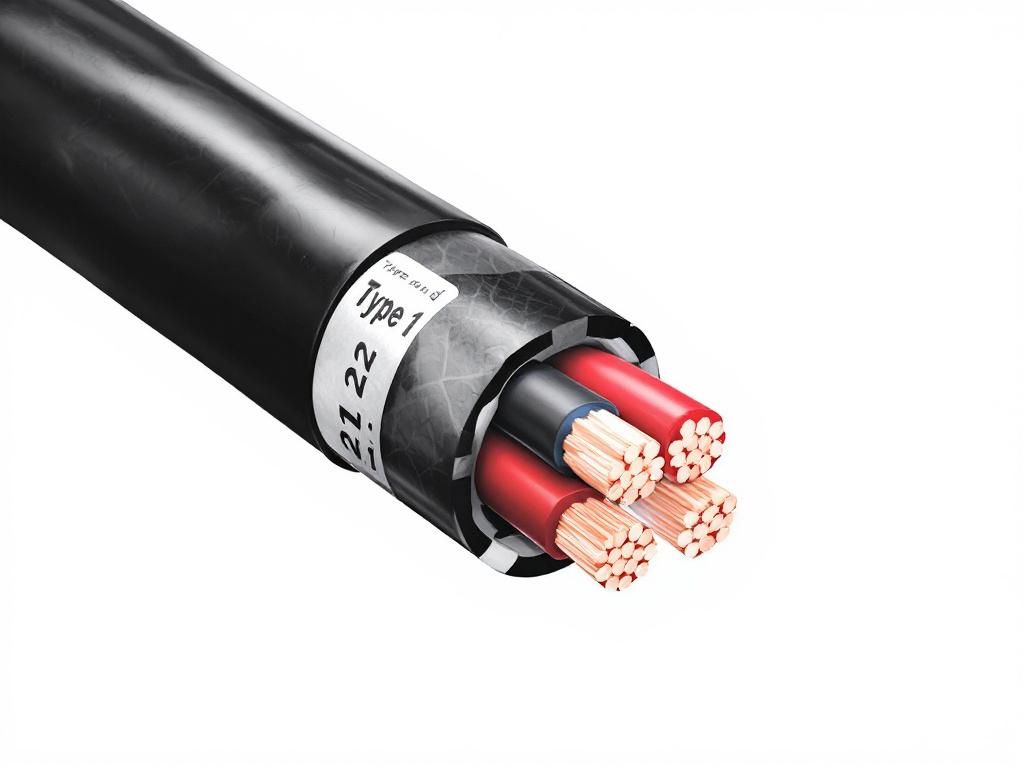
Flexible and semiconductive-screened mining cable Type 241.1 is produced according to the standards set by AS/NZS 1802. These types of cables are widely used in underground coal mining as well as for the mining power supply in general.
Electricity performance, flexibility, and mechanical protection are major functions of the cable. The materials used in this cable design are arranged in layers with specific purposes to keep the electricity flow steady and constant.
In comparison with fixed wiring cable, it is very flexible; hence, it can be applied where it is necessary to move the equipment and change the position of the cable frequently.
Type 241.1 is one of several variants available in a family of mining cables, like Type 241.3, 241.6, and 241.11, with the voltage ranges of the cables in question varying from one to another. Therefore, you should keep in mind the characteristics of each variant when making a choice.
Dismantling of the Structure: What Components Are Under the Outer Sheath?
The efficiency of a mining cable is dependent upon the collaboration of its different parts through their work as a whole.
1. Conductors for Flexible Copper
Copper flex conductors with tinning or annealing are used by this cable mostly. Copper is a good electrical conductive material, and stranded wires add to flexibility while the machine is moving. In order to protect these copper wires against any degradation or corrosion, one of the methods is that these copper wires are dipped in tinning or are covered with tinning.
2. EPR Insulation
Around the power conductors of a cable there is a coating material, Ethylene Propylene Rubber (EPR) insulation; besides that, it also performs as electrical insulation.
Due to its flexibility and resistance to heat, one of the reasons that EPR is widely used in mining cables is that it contributes to the performance of the cable, especially in the most harsh conditions.
3. Semiconductive Screening
One of the main features of Type 241.1 cable is the semiconductive screening. This element helps the cable have a proper distribution of voltage over its electrical cores and is a great advantage for a cable that needs protection from damage.
It also functions as a safe path of contact with the earth if the sheath is broken accidentally, provided, of course, that the sheath is damaged in accordance with the cable design.
Where Does Type 241.1 Cable Find Its Niche in Mining?
The true value of specialized mining cable is unveiled when it serves purposes that require steady power delivery combined with flexibility.
Below are some of the essential applications:
1. Continuous Mining Machines
Continuous machines are a part of the heavy work of underground mining. Their movement and functioning demands a cable system flexible enough to support the equipment while it is working.
Type 241.1 is employed in appropriate power feeder setups where the cable's voltage level and construction comply with the equipment's requirements.
2. Underground Water Pumps
Mining operations depend heavily on good water drainage, especially in tunnels where water accumulation not only deteriorates the condition of equipment but also affects workers.
Type 241.1 may be deployed in pump power supply cases that demand high-quality flexible electrical connections for underground mines.
3. Mobile Mining Equipment
Depending on the mining stage, there is a constant need for shifting mining equipment from one spot to another. Flexible power cables enable continuous supply of electricity even as the equipment moves.
Conclusion: Building Stronger Mining Operations with the Right Cable Partner
Reliable electrical infrastructure is a key factor for maintaining equipment performance and operational continuity in mining environments. Type 241.1 provides a flexible mining cable solution that is ideally suited for various mining applications through its flexible design, copper conductors, EPR insulation, semiconductive screening, and robust protective sheath. But the right cable selection involves checking voltage levels, conductor size, environment, and industry standards.
In such a situation, a skilled Electrical Cable Manufacturer who has knowledge in various applications becomes a significant factor. Znergy Cable should be complimented for its targeted expertise in producing mining, tunnelling, and industrial cables. With Australian engineering skills, dedicated mining cable services, and adherence to quality and application-specific requirements, Znergy Cable is a partner who can deliver the required value for those looking for cable solutions in difficult mining sites.
When each connection is important, you can build a better mining network through an investment in the correct technology and cooperation with the right manufacturer. That is how successful mining operations are built on solid ground.
Also Read: Everything You Need to Know About Type 450 Cable Specifications